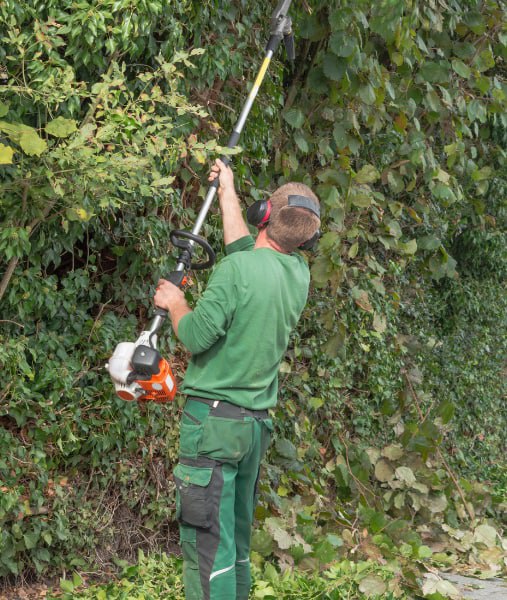
Tree pruning is a skilled process that requires an understanding of tree biology, structure and long-term growth patterns. When carried out correctly, pruning supports health, balance and safety. When done poorly, however, it can cause lasting harm. In Faversham, Kent, poorly executed pruning is a common cause of tree decline and avoidable safety concerns.
In this article, Faversham Tree Surgeons explains the key consequences of poor pruning practices and why professional tree surgery is essential.
Long-Term Damage to Tree Health
Incorrect pruning can place significant stress on a tree. Removing too much foliage or making improper cuts interferes with the tree’s ability to photosynthesise and recover.
Poor pruning may lead to:
- Reduced energy production
- Slower growth and weakened vitality
- Increased susceptibility to disease
Rather than improving health, poor pruning often accelerates decline.
Increased Risk of Disease and Decay
Badly placed or torn cuts create open wounds that struggle to heal properly. These wounds allow moisture, fungi and pests to enter the tree’s internal structure.
This can result in:
- Internal decay spreading through branches or the trunk
- Structural weakening over time
- Reduced lifespan of the tree
Once decay is established, it is often difficult to reverse.
Weak and Unstable Regrowth
One of the most common consequences of poor pruning is the development of weak regrowth. Severe or unbalanced cutting encourages fast-growing shoots that are poorly attached.
This type of regrowth:
- Breaks more easily in wind
- Creates future safety risks
- Requires repeated corrective work
Instead of improving structure, poor pruning can make trees more hazardous.
Loss of Natural Shape and Balance
Trees have natural growth forms that support stability and strength. Poor pruning often ignores this, resulting in uneven canopies or unnatural shapes.
This can cause:
- Structural imbalance
- Increased leverage on remaining branches
- Ongoing management difficulties
Corrective pruning later is often more complex than doing the job properly in the first place.
Increased Safety Risks
Poor pruning can leave behind damaged limbs, partially cut branches or unstable growth. These issues may not be immediately obvious but can fail without warning.
Risks include:
- Falling branches during adverse weather
- Danger to people, property and nearby structures
- Reduced confidence in the tree’s stability
Safety concerns are one of the most serious outcomes of incorrect pruning.
Escalation of Future Tree Work
When pruning is done badly, future maintenance often becomes more extensive. Trees may require repeated intervention to correct earlier mistakes.
This can lead to:
- More aggressive pruning being needed later
- Fewer options to preserve the tree’s structure
- Potential loss of the tree altogether
Early professional care helps avoid these unnecessary outcomes.
Impact on the Surrounding Environment
Poor pruning does not only affect the tree itself. Declining or unstable trees can impact gardens, neighbouring properties and shared spaces.
Consequences may include:
- Increased debris and maintenance issues
- Reduced visual appeal of the landscape
- Greater risk of damage during storms
Proper pruning supports both the tree and its surroundings.
Conclusion
Poor pruning practices can have serious consequences, including long-term health decline, structural weakness, increased safety risks and loss of natural form. What may seem like a simple task can cause lasting damage when carried out without the right knowledge and technique.
For property owners in Faversham, Kent, professional tree surgery ensures pruning is carried out safely, accurately and with the tree’s long-term wellbeing in mind. Faversham Tree Surgeons provides expert pruning and tree care services designed to protect tree health and maintain safe, attractive outdoor spaces. If your trees require attention, professional advice is the most reliable way to avoid the costly consequences of poor pruning.
Call us on: 01795 718991
Click here to find out more about Faversham Tree Surgeons
Click here to complete our contact form and see how we can help with your tree needs.