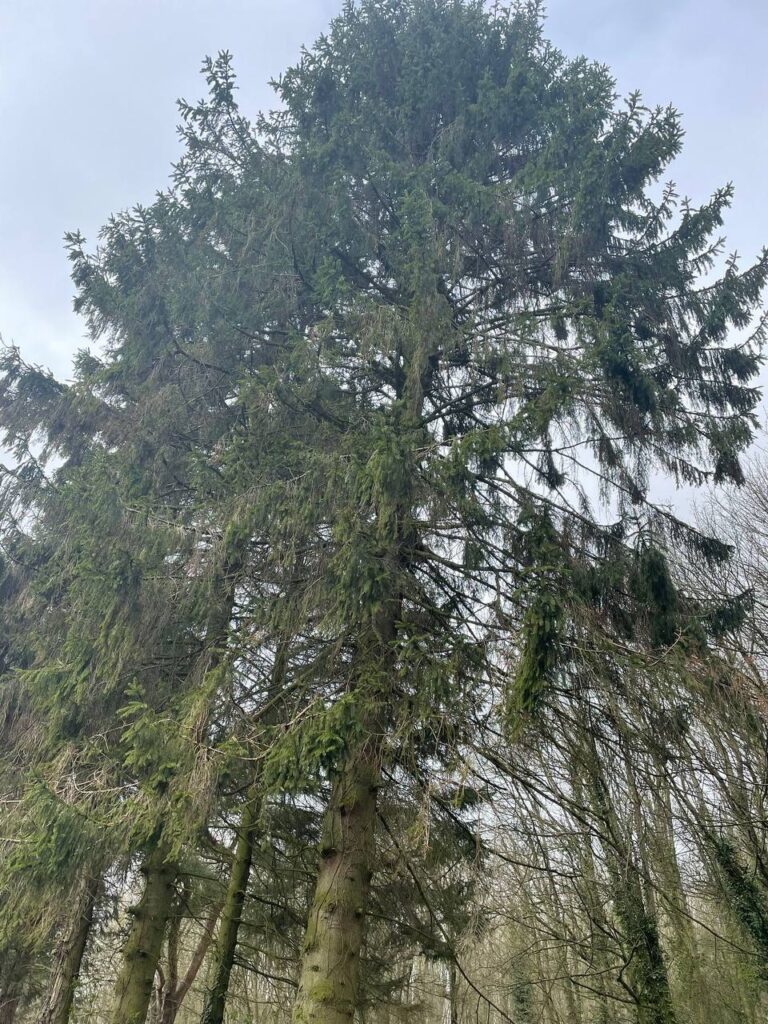
Healthy trees naturally produce new growth each year, gradually extending their branches and developing a larger crown. In many cases this growth causes no problems. However, when individual branches become excessively long or carry substantial weight towards their outer ends, the mechanical forces acting on them can increase considerably.
Long, heavily extended branches can place additional strain on branch unions and supporting sections of the tree. They may begin to droop, interfere with surrounding garden space or become more vulnerable to failure during periods of strong wind and heavy rainfall.
For homeowners in Faversham, Kent, recognising when branch growth is becoming unbalanced can help ensure trees receive appropriate professional attention before a manageable issue develops further.
Why Can Long and Heavy Tree Branches Become a Problem?
As a branch extends further from the trunk, its weight acts increasingly far away from the point where it is attached. New shoots, foliage and smaller branches add further weight, particularly during the growing season.
Several factors can contribute to excessive loading:
- Long branches extending significantly beyond the main crown
- Dense foliage concentrated towards branch ends
- Heavy secondary growth
- Weak or poorly formed branch unions
- Previous pruning that has encouraged uneven regrowth
- Branches growing predominantly towards one side
- Large amounts of deadwood within the crown
- Natural changes as the tree matures
The presence of long branches does not automatically mean a tree is unsafe. The important consideration is how the growth affects the tree’s overall structure and whether particular limbs are carrying loads they are poorly positioned to support.
Longer Branches Create Greater Leverage
One reason excessively long branches deserve attention is the mechanical leverage they can create.
A branch acts somewhat like a lever extending from the trunk or larger supporting limb. As its length and end weight increase, greater forces can be transferred back towards the branch attachment.
This becomes particularly relevant where a substantial amount of foliage is concentrated towards the outer crown.
The branch may appear healthy, but its length and weight distribution can still create structural concerns. Assessing the complete branch rather than simply looking for dead or damaged wood provides a better understanding of how it is performing.
Heavy Foliage Can Increase Branch Loading
Leaves may individually weigh very little, but a mature branch can support a considerable volume of foliage.
During the growing season, this increases the overall weight carried by the branch. Rainfall can temporarily add further loading as wet foliage holds additional moisture.
Branches that already have substantial end weight can therefore experience changing forces depending on weather and seasonal conditions.
This does not mean heavily foliated trees automatically require pruning. Healthy foliage is essential to the tree. The objective of professional tree surgery is to determine whether growth has become structurally unbalanced and whether carefully selected pruning could improve the situation.
Wind Places Additional Forces on Extended Branches
Long branches with dense foliage present a larger surface area to moving air.
During strong winds, branches naturally flex and move. Healthy trees are adapted to this movement, but unusually extended or heavily weighted limbs can experience significant additional forces.
The effect can be particularly important where a branch already has a weak attachment or previous damage.
A professional tree assessment considers how branch length, crown density, attachment points and overall structure interact rather than assuming that wind exposure alone makes pruning necessary.
What Happens When a Branch Becomes Too Heavy?
A heavily loaded branch may gradually change position as the weight increases.
Some branches begin to droop noticeably. Others may develop cracks or weaknesses around their attachment points. In certain situations, the branch may eventually fail partially or completely.
Failure does not always happen suddenly without warning. Changes in branch position, visible cracking or unusual movement can sometimes indicate that the structural relationship between the branch and the tree is changing.
These signs are worth assessing professionally, particularly when large branches extend over frequently used parts of a garden.
Branch Unions Are an Important Part of the Assessment
The point where a branch connects to the trunk or another major limb is known as the branch union.
Strong unions can support substantial growth, but not every attachment develops equally. Certain growth patterns can create unions that require closer consideration as branches become larger and heavier.
A long limb with a well-formed attachment may behave very differently from a similar-sized branch connected through a weaker union.
This is why deciding whether a branch requires attention should involve more than simply measuring its length. Its attachment, direction of growth, condition and relationship with the wider crown all matter.
Uneven Growth Can Affect the Shape of the Crown
Sometimes excessive branch length develops mainly on one side of a tree.
This can happen because of available light, surrounding structures, previous pruning or competition from nearby vegetation. Over time, one section of the crown may extend considerably further than others.
Uneven growth can alter the tree’s overall appearance and change how weight is distributed throughout the crown.
Professional pruning can sometimes improve this balance by selectively reducing particular branches rather than cutting the entire crown indiscriminately.
The aim is to work with the tree’s natural structure while addressing the growth that is creating the concern.
Why Simply Cutting a Heavy Branch Back Is Not Always Appropriate
When a branch looks too long, cutting a large section from its end may appear to be the simplest solution. Tree pruning, however, needs to consider how the tree will respond.
Poorly positioned cuts can leave unnecessary wounds, remove excessive foliage or encourage dense regrowth around the cut area. This can create new structural issues rather than resolving the original one.
Professional pruning involves selecting suitable pruning points and determining how much growth should be removed.
The objective is not to make every branch as short as possible. It is to achieve an appropriate structural improvement while retaining a healthy and functional crown.
How Can Crown Reduction Help?
Crown reduction is one technique that may be appropriate where excessive branch extension is affecting the overall structure or size of a tree.
Rather than removing branches indiscriminately, selected growth is shortened back to suitable secondary branches. This can reduce the overall spread of the crown while maintaining a more natural shape.
When properly planned, crown reduction can help address excessive end weight on selected branches and bring an overextended crown into more suitable proportions.
Not every tree with long branches requires crown reduction. The suitability of the technique depends on the species, condition, structure and reason for carrying out the work.
Can Individual Branches Be Reduced Instead?
Sometimes the wider crown remains well balanced and only one or two branches have become excessively extended.
In these circumstances, selective branch reduction may be more appropriate than reducing the whole crown.
This targeted approach allows specific areas of concern to be addressed while retaining unaffected growth.
For example, a branch that has developed substantial end weight may be carefully shortened to suitable growth points. The extent of pruning should be determined by the branch’s condition and its relationship with the rest of the tree.
Why Over-Pruning Can Create New Problems
Removing too much growth can be counterproductive.
Trees depend on their leaves for energy production, so unnecessarily removing large amounts of healthy foliage can place the tree under additional stress. Severe pruning can also encourage vigorous new shoots, potentially producing dense growth that requires further management.
Good tree surgery therefore focuses on what needs to be achieved rather than simply removing as much material as possible.
Where long and heavy branches require attention, proportionate pruning can often provide a better result than unnecessarily severe cutting.
Previous Pruning Can Influence Future Branch Weight
The way a tree has been managed in the past can influence how its crown develops later.
Certain pruning cuts can stimulate clusters of vigorous shoots. Over time, these shoots may become substantial branches, creating dense sections of growth or additional weight around particular areas.
When assessing a mature tree, previous pruning points can therefore provide useful information about why the current crown has developed in a particular way.
A suitable management approach should consider both the tree’s existing structure and how it is likely to respond after further pruning.
When Should Long Branches Be Professionally Assessed?
Branch length alone is not necessarily a reason for intervention, but certain signs make professional assessment worthwhile.
These include noticeable changes in branch position, visible cracks, unusually heavy end growth, significant deadwood, branches extending awkwardly through the crown or concerns about major limbs over frequently used garden areas.
Assessment can determine whether pruning is actually necessary and, if so, what type of work is appropriate.
For homeowners in Faversham, Kent, this provides a more informed approach than waiting until a branch has become obviously damaged or attempting unnecessary pruning simply because the tree has grown larger.
Why Professional Tree Surgery Matters
Managing large branches requires an understanding of tree structure as well as the practical ability to carry out pruning correctly.
The amount of growth removed, the position of pruning cuts and the balance retained within the crown can all influence how the tree responds afterwards.
At Faversham Tree Surgeons, we assess the structure and condition of the tree before determining whether long or heavily weighted branches require attention. Where pruning is appropriate, the aim is to address the specific concern while retaining a balanced and healthy crown wherever possible.
For trees in Faversham, Kent, this considered approach helps ensure that pruning has a clear purpose rather than simply reducing growth unnecessarily.
Conclusion
Tree branches that become excessively long and heavy can place increasing forces on their attachment points, particularly when substantial foliage is concentrated towards the ends. Wind, rainfall, uneven crown development and weaker branch unions can further influence how these limbs perform.
Not every long branch needs to be removed or heavily reduced. The important factors are its condition, attachment, weight distribution and relationship with the rest of the tree. Where intervention is appropriate, selective pruning or crown reduction can help manage excessive extension without unnecessarily removing healthy growth.
If you have concerns about long, heavy or overextended branches on a tree at your property in Faversham, Kent, contact Faversham Tree Surgeons. We can assess the tree’s structure and recommend suitable tree surgery based on its condition and the growth that genuinely requires attention.
Call us on: 01795 718991
Click here to find out more about Faversham Tree Surgeons
Click here to complete our contact form and see how we can help with your tree needs.