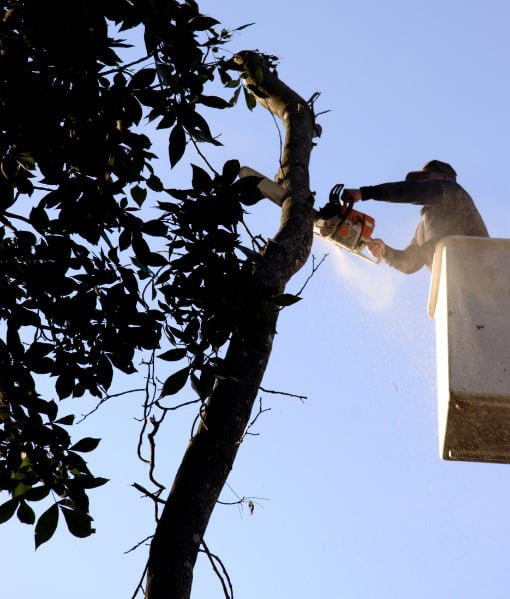
Tree branches pressing against a window should not be treated as a minor inconvenience. Repeated contact can scratch glass, damage frames and create noise during windy weather. As the branches continue to grow, they may also reach gutters, roof coverings or other parts of the building.
The right response is usually careful, selective pruning rather than cutting back the nearest branch without considering the wider tree. A professional assessment can determine where the growth originates, how much clearance is needed and which pruning method will preserve a balanced crown.
How to Deal With Branches Growing Against Your Property
Assess the Contact From a Safe Position
Begin by observing the affected area from inside the property and at ground level. Note whether the branches are lightly brushing the glass or placing visible pressure against the window, frame or surrounding wall.
Useful details include:
- Whether contact occurs constantly or only during windy weather
- The size and approximate thickness of the branches
- Whether the growth also reaches the roof or guttering
- Signs of scratching or damage around the window
- Whether branches appear cracked, dead or poorly attached
- How quickly the clearance problem has developed
Avoid leaning from the window, climbing a ladder or pulling heavy branches away by hand. A branch under tension can move unexpectedly when cut or released.
Do Not Simply Cut the Branch at the Window
Removing the section nearest the glass may create temporary clearance, but it may leave a long stub or an unsuitable wound. Poorly positioned cuts can also encourage dense regrowth that returns to the same area.
Professional pruning works back to a suitable branch junction or growth point. This produces a cleaner structure and helps direct future growth away from the property.
Selective Pruning Can Restore Clearance
Where only a small part of the crown is causing the problem, selective branch removal may be sufficient. The aim is to remove or shorten particular branches without unnecessarily reducing the entire tree.
This approach may:
- Restore a practical gap around the window
- Reduce repeated contact during wind
- Retain the tree’s natural shape
- Avoid removing healthy branches elsewhere
- Improve access for window cleaning and maintenance
- Reduce the likelihood of immediate regrowth towards the building
The amount of clearance needed depends on the tree species, branch flexibility and expected seasonal growth.
Crown Reduction May Be Appropriate for Wider Encroachment
If several branches are extending towards the building, a carefully planned crown reduction may provide a more balanced solution. This involves reducing the height or spread of the canopy while retaining its natural framework.
The work should be distributed across suitable parts of the crown rather than concentrated only on the side nearest the window. Removing too much from one side can leave the tree visually and structurally unbalanced.
Dead or Damaged Branches Need Particular Attention
A branch pressing against a window may be more concerning if it is dead, split or weakly attached. Damaged wood may move unpredictably and could break during strong winds.
A tree surgeon can inspect the branch union, surrounding canopy and condition of the main stem. Removing significant deadwood may be necessary even if it is not currently touching the property.
Check Nearby Gutters and Roof Materials
Branches that reach windows may also scrape guttering, fascias, soffits or roof coverings. Leaves and small twigs can collect in gutters and restrict water flow, while repeated branch movement can affect roof-edge components.
The surrounding area should be checked from a safe position for:
- Guttering that has shifted or become obstructed
- Scratches or marks on fascia boards
- Leaves collecting in valleys or outlets
- Branches resting on tiles or slates
- Damage around roof windows
- Damp staining below overflowing gutters
A tree surgeon can address the encroaching growth, while any existing building damage should be assessed by an appropriate professional.
Consider Why the Problem Has Developed
Branches may have reached the window because routine maintenance has been delayed, the tree has produced vigorous new growth or earlier pruning directed growth towards the property.
Understanding the cause helps shape a better maintenance plan. A fast-growing tree may need periodic inspection, while slower-growing species may require less frequent attention. The aim is to maintain reasonable clearance before direct contact returns.
Avoid Excessive Cutting
Removing a large amount of foliage solely to create maximum clearance can stress the tree and produce an unnatural appearance. Severe cutting may also encourage vigorous shoots that are weakly attached and quickly recreate the problem.
The recommended work should reflect the tree’s species, condition, age and position. In many cases, modest but well-placed cuts are more effective than a heavy reduction.
When the Whole Tree Should Be Assessed
The problem may extend beyond one branch if the tree has:
- A pronounced lean towards the building
- Cracks in the trunk or major branch unions
- Significant deadwood throughout the canopy
- Recent movement around the root area
- Several heavy branches over the property
- An unbalanced crown following earlier damage
- Repeated branch failure
These signs do not automatically mean the tree needs removing. They indicate that a complete structural assessment is more appropriate than treating only the branch touching the window.
Why Professional Tree Surgery Adds Value
Working close to glass, roofs and walls requires controlled cutting and careful handling of branches. The surrounding property must be protected while the correct amount of growth is removed.
Faversham Tree Surgeons can assess the tree as a whole, identify suitable pruning points and create clearance without unnecessary cutting. Where space is restricted, branches can be dismantled in manageable sections rather than allowed to fall freely.
Conclusion
When branches press against a window, avoid pulling or cutting them from a ladder. Selective pruning or a balanced crown reduction can usually restore clearance while preserving the tree’s structure and appearance.
If a tree at your property in Faversham, Kent, is making contact with windows, guttering or the roof, contact Faversham Tree Surgeons to arrange a professional assessment. Early attention can prevent repeated contact and establish a practical maintenance plan for the tree.
Call us on: 01795 718991
Click here to find out more about Faversham Tree Surgeons
Click here to complete our contact form and see how we can help with your trees needs